

Most retirement problems are not caused by one massive mistake. They happen because small retirement plan leaks quietly drain the system year after year.
These leaks often stay hidden until:
- Taxes spike.
- Markets get volatile.
- Your “safe” spending number suddenly feels tight.
If you have a multi-million dollar portfolio and a large IRA that will soon produce income, these retirement plan leaks can force spending cuts and increase stress at exactly the wrong time.
Here are the three biggest leaks and how to plug them.
Retirement Plan Leaks #1: Wasted Tax Valleys
The first of the retirement plan leaks hides inside your tax strategy.
Many retirees look at their tax bracket and assume they understand their situation. But retirement taxes are not just about your bracket. They are about timing.
Early in retirement, there is often a stretch of years where taxable income is lower. Social Security may not have started. Required Minimum Distributions have not begun. Withdrawals may come from a brokerage account.
This lower tax period is what many planners call a tax valley.
The mistake is doing nothing during the valley because taxes feel manageable. Later, when Required Minimum Distributions begin and Social Security becomes taxable, income stacks up. Taxes rise. Medicare premiums may increase due to IRMAA. Flexibility shrinks.
This is where the Social Security tax torpedo comes into play. Adding $1,000 of income can trigger additional taxation of Social Security benefits and higher marginal costs than expected. Up to 85 percent of Social Security benefits can become taxable, which surprises many retirees.
The solution is not zero taxes. It is taxes on purpose.
That can include:
- Roth conversions during lower income years.
- Qualified Charitable Distributions later.
- Tax gain harvesting when appropriate.
- Careful IRMAA planning to avoid unintended Medicare premium jumps.
Plugging this retirement plan leak restores control over your long term tax strategy.
Retirement Plan Leaks #2: Sequence of Returns Risk
The second of the retirement plan leaks shows up early in retirement.
If markets fall in your first year and your income depends on selling stocks, you are exposed to sequence of returns risk.
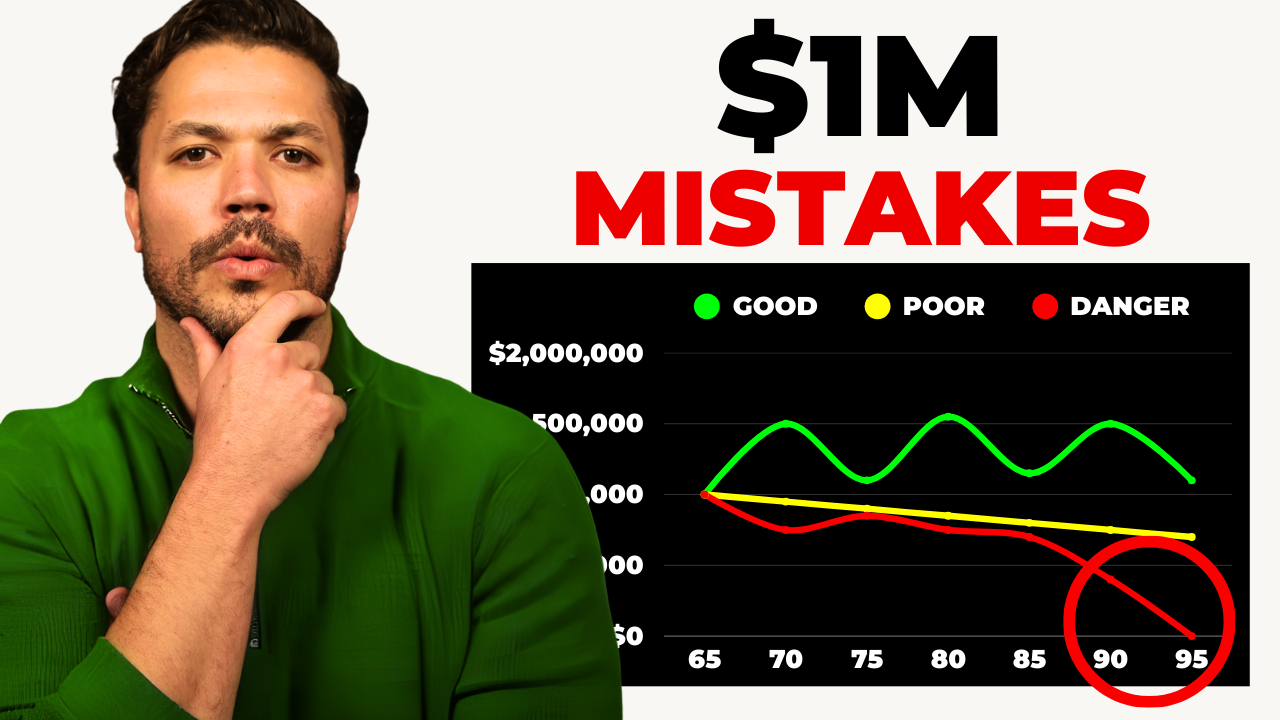
Three portfolios can all average 7 percent over time, yet produce dramatically different retirement outcomes depending on when the bad years occur. In accumulation, volatility feels manageable because you are contributing. In retirement, you are withdrawing. Timing suddenly matters.
A portfolio that begins retirement with strong returns may thrive. A portfolio that starts with a downturn may struggle, even if long term averages are identical.
This is why retirement plan leaks tied to market timing are so dangerous.
The solution is to install rules before the market tests you.
Guardrails are pre set rules that adjust income based on portfolio performance. If the portfolio falls below a certain level, spending is reduced modestly and early. If it rises above a threshold, spending can increase.
Pairing guardrails with a war chest of conservative assets adds another layer of protection. The war chest holds near term income in safer investments so you are not forced to sell stocks during a downturn.
This turns volatility from a threat into something manageable.
Retirement Plan Leaks #3: Tax Drag and Hidden Investment Costs
The third of the retirement plan leaks is subtle.
It often looks like normal investing. A slightly higher expense ratio. A diversified fund. Solid performance that tracks the market closely.
But in a taxable account, tax inefficiency can quietly erode returns.
Tax drag is the performance lost to taxable distributions over time. Two funds may appear similar before taxes, yet one can create far more taxable income each year. That reduces after tax returns and increases your annual tax bill.
If you are using your taxable account strategically during the tax valley to manage Roth conversions and adjusted gross income, tax efficiency matters even more.
Plugging this retirement plan leak requires an investment drain audit:
- Review expense ratios.
- Evaluate tax location to ensure tax inefficient investments are not in taxable accounts.
- Simplify to reduce overlap and behavioral mistakes.
Small annual drags compound significantly over time.
When Retirement Plan Leaks Stack
Each retirement plan leak is damaging on its own. But the real danger occurs when they stack.
Higher taxes force higher withdrawals. Higher withdrawals during a downturn increase sequence risk. Tax drag reduces after tax spending power.
That tightening creates stress. Stress increases the chance of emotional decisions. But when you plug these retirement plan leaks, the spiral never begins. Taxes become intentional. Market volatility becomes structured. Investments become efficient. And retirement shifts from reactive to strategic.
That is the difference between hoping your plan works and knowing how it works.
The Retirement Recap
Join the 1,000+ other retirees and get weekly articles and videos to help you retire with confidence. Subscribers also gain access to our private monthly client memo.
Seek Professional Guidance
Navigating retirement decisions can be complex. Consulting with a certified financial planner can provide personalized insights and strategies tailored to your unique circumstances. Whether you’re nearing retirement or planning ahead, expert advice can help you optimize your Social Security benefits and achieve greater financial confidence in your retirement years.
This does not constitute an investment recommendation. Investing involves risk. Past performance is no guarantee of future results. Consult your financial advisor for what is appropriate for you. Disclosures: https://onedegreeadvisors.com/disclosure/