

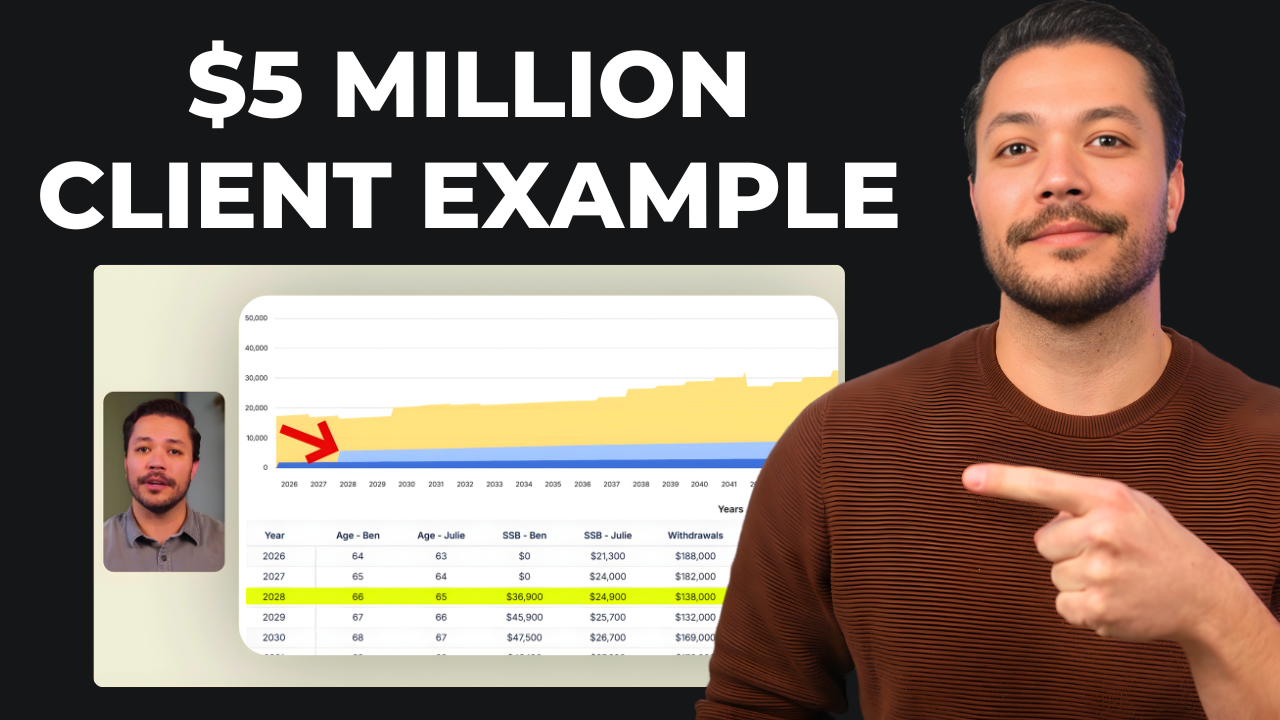
A $5M portfolio is a significant financial milestone. But the real question isn’t how much you’ve accumulated — it’s how much you can confidently spend without jeopardizing your long-term security.
Spending in retirement requires more than a simple percentage rule. It involves balancing growth, taxes, market volatility, and your personal comfort with risk. When structured correctly, a $5M portfolio can support a substantial and sustainable income stream.
A common starting point for retirement planning is the 4% rule. Applied to a $5M portfolio, that suggests:
$200,000 per year in withdrawals, adjusted annually for inflation.
Even at a more conservative 3.5% withdrawal rate, that still equates to $175,000 per year. For many retirees, that level of income supports housing, travel, healthcare, and lifestyle expenses — especially when combined with Social Security or other income sources.
However, a withdrawal rate isn’t a promise. It’s a guideline based on historical market returns. The sustainability of spending depends heavily on how the portfolio is invested and how flexible your spending can be during market downturns.
Investment Strategy Matters
A $5M portfolio is typically invested in a diversified mix of assets. A balanced allocation — such as 60% equities and 40% fixed income — aims to provide continued growth while reducing volatility.
Growth is critical. Retirement can last 25–35 years or longer. Inflation steadily erodes purchasing power, and without exposure to equities, a portfolio may struggle to maintain long-term income.
At the same time, too much volatility can create anxiety and lead to poor decision-making during downturns. The goal is to construct a portfolio that supports spending needs while allowing you to stay disciplined through market cycles.
The Hidden Impact of Taxes
Spending from a $5M portfolio isn’t just about how much you withdraw — it’s about how much you keep.
Withdrawals from traditional IRAs or 401(k)s are taxed as ordinary income. Brokerage accounts generate capital gains. Roth accounts may provide tax-free income. The sequence in which you draw from these accounts can significantly affect your lifetime tax burden.
Strategic withdrawal planning can increase after-tax income without increasing portfolio risk. Managing tax brackets, coordinating Social Security timing, and minimizing required minimum distributions all play a role in maximizing spendable income.
The Risk of Underspending
Surprisingly, one of the most common risks among high-net-worth retirees is underspending.
After decades of disciplined saving, many struggle to transition into spending. Market volatility can amplify fears of running out of money, even when the numbers suggest strong sustainability.
A properly structured $5M portfolio should provide not just income — but confidence. Confidence to spend appropriately, enjoy retirement, and adapt spending as circumstances change.
How Much Can You Really Spend?
For many households, a $5M portfolio can reasonably support annual spending in the $175,000–$200,000 range before additional income sources.
The key isn’t maximizing withdrawals. It’s creating a flexible strategy that balances growth, taxes, and lifestyle goals.
When thoughtfully managed, a $5M portfolio can provide both financial security and meaningful freedom throughout retirement.lexible when supported by disciplined asset allocation, tax-efficient strategies, and a thoughtful spending plan.
The Retirement Recap
Join the 1,000+ other retirees and get weekly articles and videos to help you retire with confidence. Subscribers also gain access to our private monthly client memo.
Seek Professional Guidance
Navigating retirement decisions can be complex. Consulting with a certified financial planner can provide personalized insights and strategies tailored to your unique circumstances. Whether you’re nearing retirement or planning ahead, expert advice can help you optimize your Social Security benefits and achieve greater financial confidence in your retirement years.
This does not constitute an investment recommendation. Investing involves risk. Past performance is no guarantee of future results. Consult your financial advisor for what is appropriate for you. Disclosures: https://onedegreeadvisors.com/disclosure/