

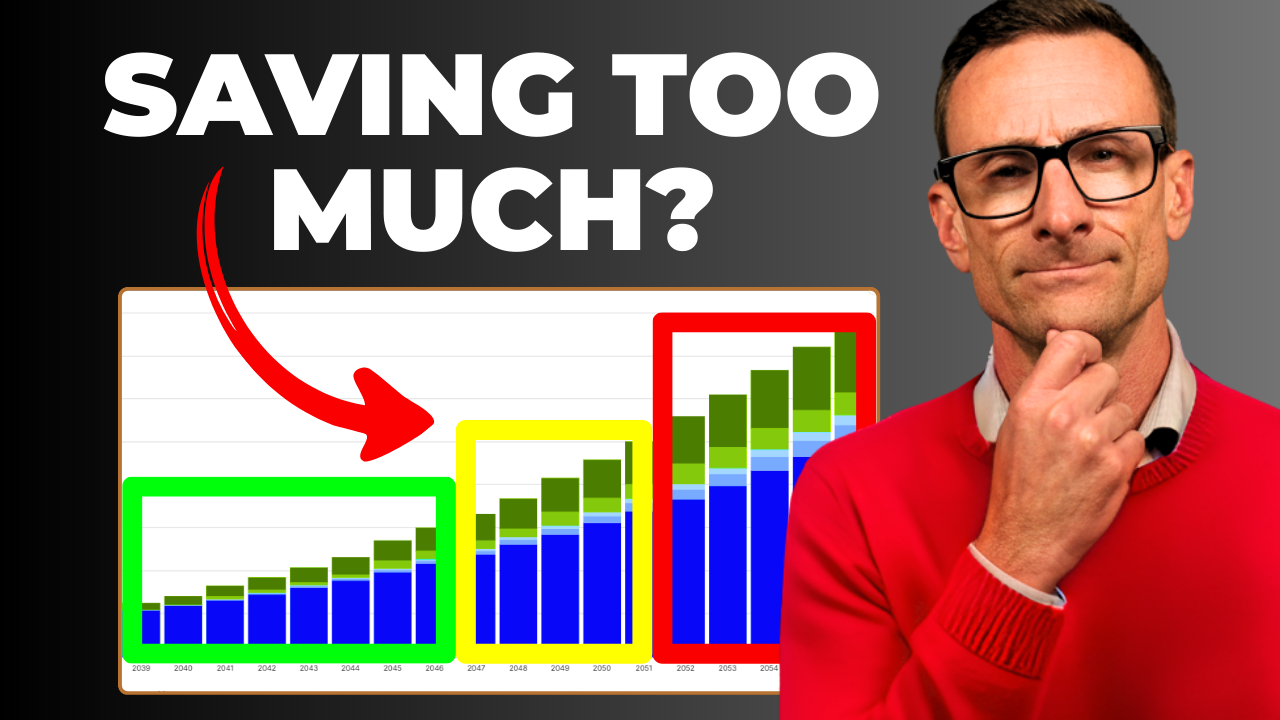
For decades, retirement advice has focused on one core message: save more. Max out your 401(k). Increase contributions every year. Delay lifestyle upgrades. Build a bigger nest egg.
But there’s a question few people ask:
Can you save too much for retirement?
For many professionals in their 50s and early 60s, the answer may be yes.
The Accumulation Trap
During your peak earning years, it’s natural to prioritize retirement contributions. You’ve built strong saving habits, your income is higher, and catch-up contributions allow you to accelerate growth.
The problem is that many people never reassess.
They continue maximizing contributions automatically — even after reaching financial independence. Instead of shifting toward strategy, tax efficiency, and lifestyle design, they stay in accumulation mode.
At some point, saving more stops meaningfully improving your future and starts limiting your present.
Signs You May Be Saving Too Much
You might be over-saving if:
- You already have enough invested to meet your retirement income goals
- You’re consistently underspending relative to your income
- You’re deferring meaningful experiences “until retirement”
- You haven’t built a clear retirement income plan
The key isn’t hitting a random savings number. It’s knowing whether additional dollars materially change your future.
If you already have more than enough to sustain your desired lifestyle, continuing to aggressively save may create opportunity costs — including time, flexibility, and life experiences.
The Shift From Saving to Strategy
Retirement planning has two distinct phases:
- Accumulation — building assets
- Distribution and optimization — turning assets into income
Many people excel at phase one and neglect phase two.
As retirement approaches, priorities shift:
- Tax planning becomes more important than contribution maximization
- Asset allocation needs to reflect income timing
- Withdrawal sequencing strategies matter
- Healthcare and Medicare planning enter the picture
- Lifestyle design becomes central
At this stage, adding more money to tax-deferred accounts may not be the highest-impact move.
What to Focus on Instead
Instead of asking, “How much more can I save?” consider asking:
- What after-tax income will I need?
- How will I draw from different accounts?
- What are my projected required minimum distributions?
- How can I minimize lifetime taxes?
- Am I living well now?
Saving too much for retirement isn’t about having “too much money.” It’s about misallocating resources in your final working years.
Balance Is the Goal
Strong savers often struggle to pivot. But retirement planning is not a contest to die with the largest account balance.
It’s about aligning money with purpose.
If your plan shows you’re already on track, it may be time to ease off maximum contributions and redirect some of that income toward lifestyle, flexibility, charitable giving, or strategic tax planning.
The goal isn’t to save forever.
It’s to build a life — and then fund it intelligently.
The Retirement Recap
Join the 1,000+ other retirees and get weekly articles and videos to help you retire with confidence. Subscribers also gain access to our private monthly client memo.
Seek Professional Guidance
Navigating retirement decisions can be complex. Consulting with a certified financial planner can provide personalized insights and strategies tailored to your unique circumstances. Whether you’re nearing retirement or planning ahead, expert advice can help you optimize your Social Security benefits and achieve greater financial confidence in your retirement years.
This does not constitute an investment recommendation. Investing involves risk. Past performance is no guarantee of future results. Consult your financial advisor for what is appropriate for you. Disclosures: https://onedegreeadvisors.com/disclosure/