

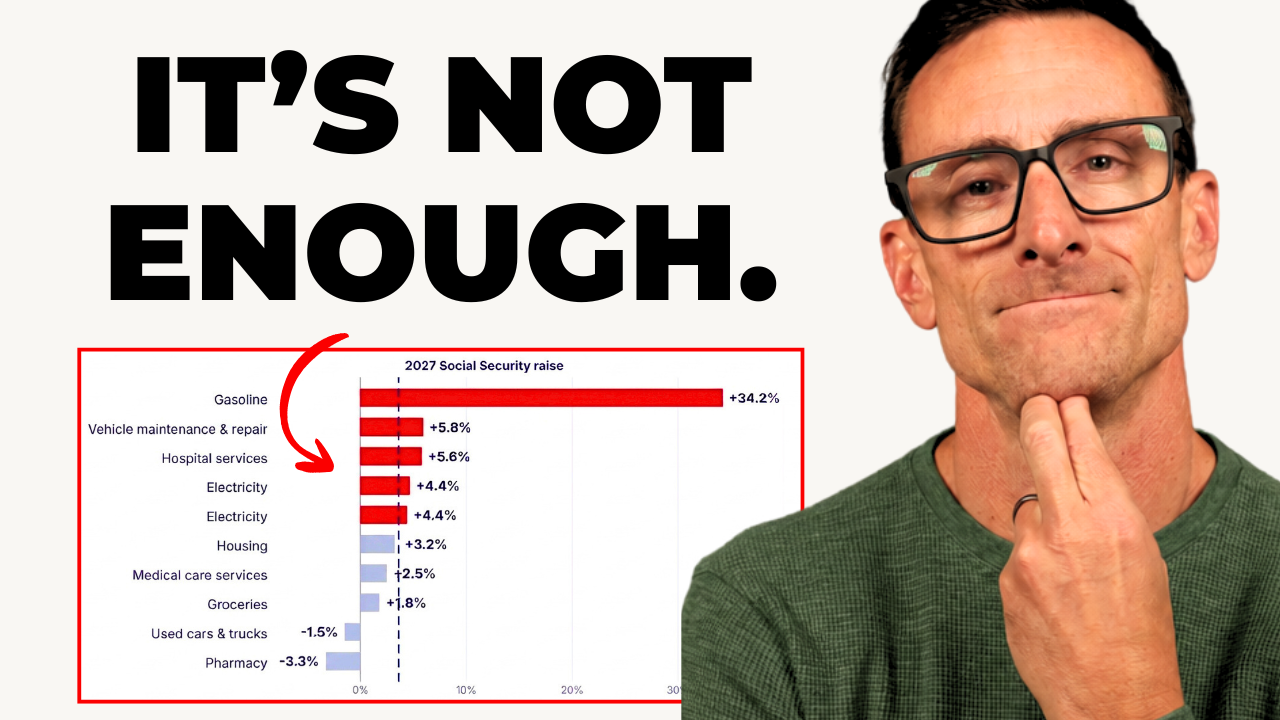
Retirees have received a raise every year since 2017. Yet by one study’s estimate, benefits are still worth 13.7% less than they were a decade ago. So when the Social Security Administration announced a 3.6% Social Security increase for 2027, the real question became whether it closes any of that gap. That’s especially true once higher Medicare premiums come out of the check.
Here’s what the raise really means for your income, and three planning adjustments that can help keep your money ahead of inflation.
The 2027 Social Security Increase by the Numbers
On October 14, the Social Security Administration announced a 3.6% cost-of-living adjustment (COLA) for 2027. For the average retiree, that works out to about $75 more per month, starting in January.
That’s up from 2.8% this year. It’s also the largest increase since 2023, when benefits jumped 8.7%. If you’re 62 or older but haven’t claimed yet, the raise still applies to your future benefit.
Why a Bigger Raise Isn’t Good News
The COLA is based on how much prices rose from July through September compared with the same months a year earlier. Rising energy prices drove part of this year’s increase.
The sequence matters. Prices go up first, and you pay more at the gas station and grocery store for months. The raise doesn’t arrive until January.
A bigger COLA isn’t a sign that things are getting better. It’s a sign that prices have already risen and Social Security is catching up after the fact.
Where Your Social Security Increase Goes First
Many retirees see 3.6% and assume all of it lands in their account. It doesn’t.
Medicare Part B. For most retirees, the Part B premium is deducted before the check arrives. The Medicare Trustees project the standard premium will rise from $202.90 to $209.50 a month in 2027, an increase of $6.60. Treat that as an estimate until Medicare announces the official figure in November. For the average retiree, the $75 raise shrinks to about $68.40.
IRMAA. Higher-income retirees pay an extra Medicare charge, IRMAA, on top of the standard Part B and Part D premiums. Using 2026 figures, IRMAA starts when a married couple’s modified adjusted gross income exceeds $218,000. At that first tier, the surcharges total about $2,300 a year for the couple. By comparison, an average retired couple gets about $1,800 a year from the COLA. Going just $1 over the line can cost more than the raise you’re both receiving.
IRMAA looks back two years, so your 2027 premiums are based on your 2025 tax return. A Roth conversion, a large capital gain, or a final year of salary from 2025 can show up on your Medicare bill now. When your 2027 notice arrives, check which tier you’re in. Notices appear in your My Social Security account in late November, or by mail in December. If your income has dropped since then because you retired, you can ask Social Security to use your current income by filing Form SSA-44.
Taxes. The income thresholds that determine how much of your benefit is taxed are $32,000 and $44,000 for married couples. They were set in 1983 and 1993 and have never been adjusted for inflation. At higher incomes, up to 85% of your benefit is taxable, including the raise.
Is the Social Security Increase Keeping Up with Inflation?
If your money doesn’t stretch as far as it used to, you’re not imagining it. The Senior Citizens League’s 2026 Loss of Buying Power study found that benefits have lost 13.7% of their buying power since 2016. By its estimate, the average benefit would need to rise about $296 a month to recover.
The Senior Citizens League is an advocacy group, so it’s fair to ask whether government data agrees. The government also tracks inflation for Americans 62 and older. From 2002 to 2021, that index came out nearly the same as the one Social Security uses.
Either way, nobody spends the average. Everyone gets the same 3.6%, whether their biggest costs are gas and groceries or health insurance and home repairs. If more of your budget goes to the fastest-rising categories, your costs can outrun the raise. Even a small annual gap compounds over a 25- or 30-year retirement.
Three Adjustments to Keep Your Income Ahead of Inflation
When Social Security falls behind your costs, you have two options: spend less, or let your portfolio make up the difference. The risk is that stocks can fall right when you need income. A bad stretch early in retirement does the most damage, because you’re withdrawing while prices are down. This is called sequence of returns risk. These three adjustments work together to address it.
1. Growth
Since 1926, U.S. stocks have returned roughly 7% a year after inflation. That average hides wide swings. Annual returns have ranged from up 54% to down 43%, with 73 positive years and 26 negative ones. Growth has shown up over decades, but you can’t count on it in any single year.
2. Stability: The War Chest
The war chest is the part of your portfolio held in cash and short- to intermediate-term high-quality bonds. It’s sized to cover roughly three to seven years of withdrawals. When stocks fall 30%, you draw income from the war chest instead of selling stocks at a loss.
Size it based on what you plan to withdraw from the portfolio, not on what you spend. Every dollar Social Security covers is a dollar the war chest doesn’t need to hold. Bigger isn’t automatically safer, because cash and bonds are there for stability, not to outpace inflation over decades.
3. Staying on Track: Guardrails
Withdrawals often follow what we call a “hatchet” shape. Before Social Security begins, the portfolio may be the only source of income, so withdrawals run high. Once benefits start, withdrawals drop. Guardrails tell you when to adjust spending along the way.
Take a hypothetical $3 million portfolio. If it grows to an upper guardrail of about $4.3 million, you could raise spending by $5,000 a month. If it falls to a lower guardrail of about $1.8 million, you would trim spending by $600 a month. The portfolio would have to drop about 39% before that cut is triggered. Instead of reacting to headlines, you make small changes only when the numbers call for it.
The Bottom Line
The 2027 Social Security increase is real, and it helps. But it’s catching up to prices you’ve already paid, and you won’t keep all of it after Medicare and taxes.
A few practical steps:
- Review your 2027 COLA notice when it arrives and confirm your IRMAA tier.
- File Form SSA-44 if your income has dropped because you retired.
- Size your cash and bond reserve to your actual withdrawals.
- Set spending guardrails so changes are planned, not emotional.
Social Security can’t carry your lifestyle alone. A coordinated plan of growth, stability, and guardrails can keep your income ahead of inflation instead of always catching up to it.
The Retirement Recap
Join the 1,000+ other retirees and get weekly articles and videos to help you retire with confidence. Subscribers also gain access to our private monthly client memo.
Seek Professional Guidance
Navigating retirement decisions can be complex. Consulting with a certified financial planner can provide personalized insights and strategies tailored to your unique circumstances. Whether you’re nearing retirement or planning ahead, expert advice can help you optimize your Social Security benefits and achieve greater financial confidence in your retirement years.
This does not constitute an investment recommendation. Investing involves risk. Past performance is no guarantee of future results. Consult your financial advisor for what is appropriate for you. Disclosures: https://onedegreeadvisors.com/disclosure/