

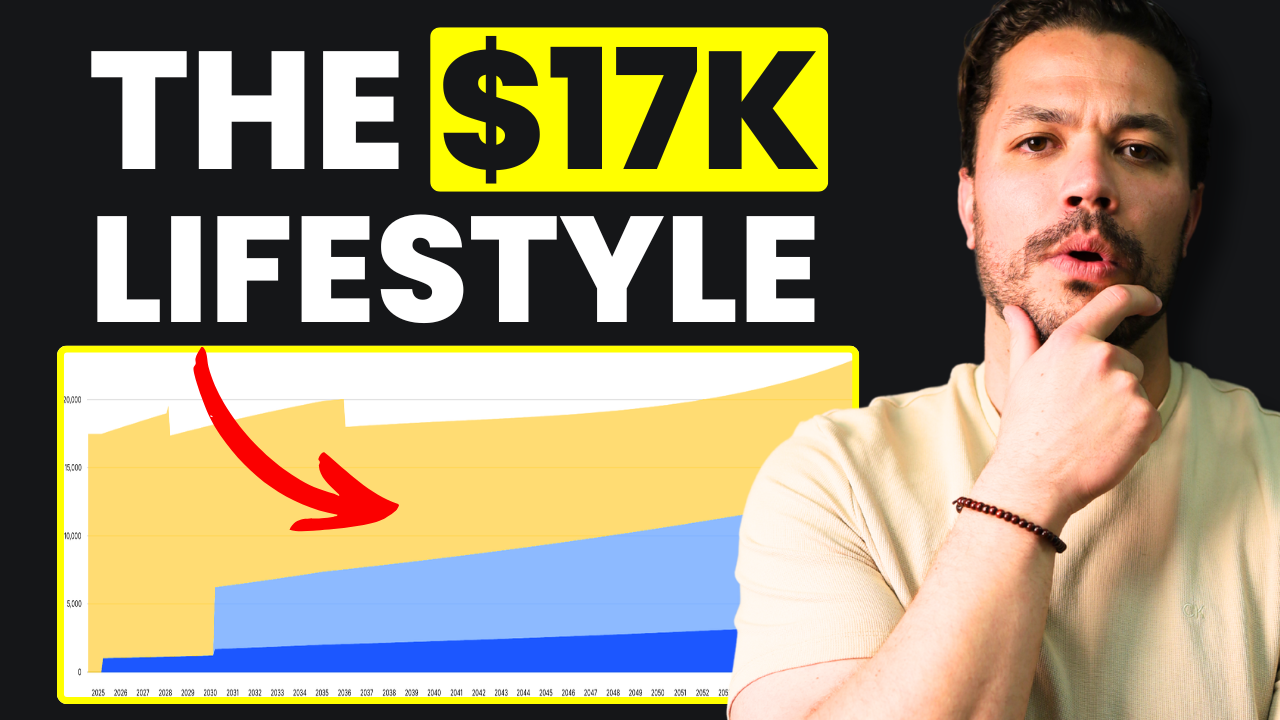
Spending $17,000 per month in retirement translates to roughly $204,000 per year, a lifestyle that falls into the high-income retirement category. The key question is whether your portfolio can sustain that level of spending over a 25–30 year retirement.
A common benchmark in retirement planning is the safe withdrawal rate, often cited at around 4%. Based on that guideline, a $2 million portfolio would generate approximately $80,000 per year, far below the $204,000 needed to support a $17K monthly lifestyle.
Can You Spend $17K Per Month in Retirement?
Spending $17,000 per month in retirement equates to about $204,000 per year. That level of income supports a very comfortable lifestyle—travel, dining, housing, and discretionary spending, but it also requires substantial financial resources to sustain over time.
The critical question is not whether it’s possible, but whether it’s sustainable for the length of your retirement.
What Does the Math Say?
A widely used rule of thumb in retirement planning is the 4% safe withdrawal rate. This guideline suggests that withdrawing 4% of your portfolio annually gives you a strong probability of not running out of money over a 30-year retirement.
Using that framework:
- A $2 million portfolio generates about $80,000 per year
- A $3 million portfolio produces roughly $120,000 per year
Both fall significantly short of the $204,000 needed to spend $17K per month.
To safely support that level of spending, you would typically need closer to $5 million to $6 million invested, depending on market conditions, asset allocation, and longevity assumptions.
Why High Withdrawal Rates Are Risky
Trying to fund $204,000 per year from a $2 million portfolio means withdrawing over 10% annually, more than double the commonly accepted safe rate. While this might work in the short term, it dramatically increases the risk of depleting your portfolio too early.
One of the biggest threats is sequence of returns risk. If the market declines early in retirement while you are taking large withdrawals, your portfolio may not recover, even if markets improve later. This creates a compounding negative effect that can shorten the life of your investments.
How Social Security Fits In
Social Security can play an important role in bridging the gap. Depending on your work history and claiming strategy, a couple might receive between $3,000 and $6,000 per month in combined benefits.
While helpful, this still leaves a significant shortfall if your goal is $17K per month. For example:
- $5,000/month from Social Security reduces your need to $12,000/month from investments
- That still requires roughly $144,000 per year from your portfolio
Even with Social Security, a sizable investment base is still necessary.
Strategies to Make $17K Per Month More Achievable
If your current savings don’t fully support this level of spending, there are several ways to improve your chances:
1. Build Flexibility into Your Plan
Instead of a fixed $17K monthly withdrawal, consider adjusting spending based on market performance. Spending less during downturns can significantly extend portfolio longevity.
2. Delay Retirement
Working a few additional years allows you to save more while reducing the number of years your portfolio needs to support you. This can have a powerful impact on sustainability.
3. Diversify Income Sources
Supplemental income, such as rental properties, dividends, or part-time work, can reduce pressure on your portfolio and improve long-term outcomes.
4. Reevaluate Spending Priorities
Even small adjustments, like reducing discretionary expenses, can lower your required withdrawal rate and make your plan more resilient.
Aligning Lifestyle with Financial Reality
A $17,000 monthly retirement budget is absolutely achievable, but typically only for those with substantial assets and a well-structured income plan. For many retirees, the key is finding the right balance between desired lifestyle and financial sustainability.
Rather than focusing solely on a target number, successful retirement planning involves flexibility, risk management, and ongoing adjustments. By understanding how your spending aligns with your portfolio, you can build a plan that supports both your goals and your long-term security.
The Retirement Recap
Join the 1,000+ other retirees and get weekly articles and videos to help you retire with confidence. Subscribers also gain access to our private monthly client memo.
Seek Professional Guidance
Navigating retirement decisions can be complex. Consulting with a certified financial planner can provide personalized insights and strategies tailored to your unique circumstances. Whether you’re nearing retirement or planning ahead, expert advice can help you optimize your Social Security benefits and achieve greater financial confidence in your retirement years.
This does not constitute an investment recommendation. Investing involves risk. Past performance is no guarantee of future results. Consult your financial advisor for what is appropriate for you. Disclosures: https://onedegreeadvisors.com/disclosure/