

Retiring with $5 million sounds like a finish line. It’s a real accomplishment. But the number alone doesn’t tell you whether the money will last 30 years or whether a costly mistake is hiding somewhere along the way.
To show what a plan does, here is how one couple, Brandon and Bella, approached it. They plan to retire in one year.
What $5 Million Looks Like on Paper
Brandon and Bella didn’t reach $5 million through a windfall or a business sale. They got there with good careers, decades of 401(k) saving and the discipline to stay invested when markets got uncomfortable.
Their investable assets total about $5.1 million:
- Joint brokerage account: $500,000
- Brandon’s 401(k): $1.6 million, and IRA: $550,000
- Bella’s 401(k): just under $1.9 million, IRA: $400,000, and Roth IRA: $200,000
They also have $90,000 in the bank and a Southern California home worth just over $1.5 million. The mortgage balance is $151,000 at a fixed 3.25%, so they see no rush to pay it off. About 86% of their investments sit in pretax accounts, which matters a great deal later.
Setting a Spending Target
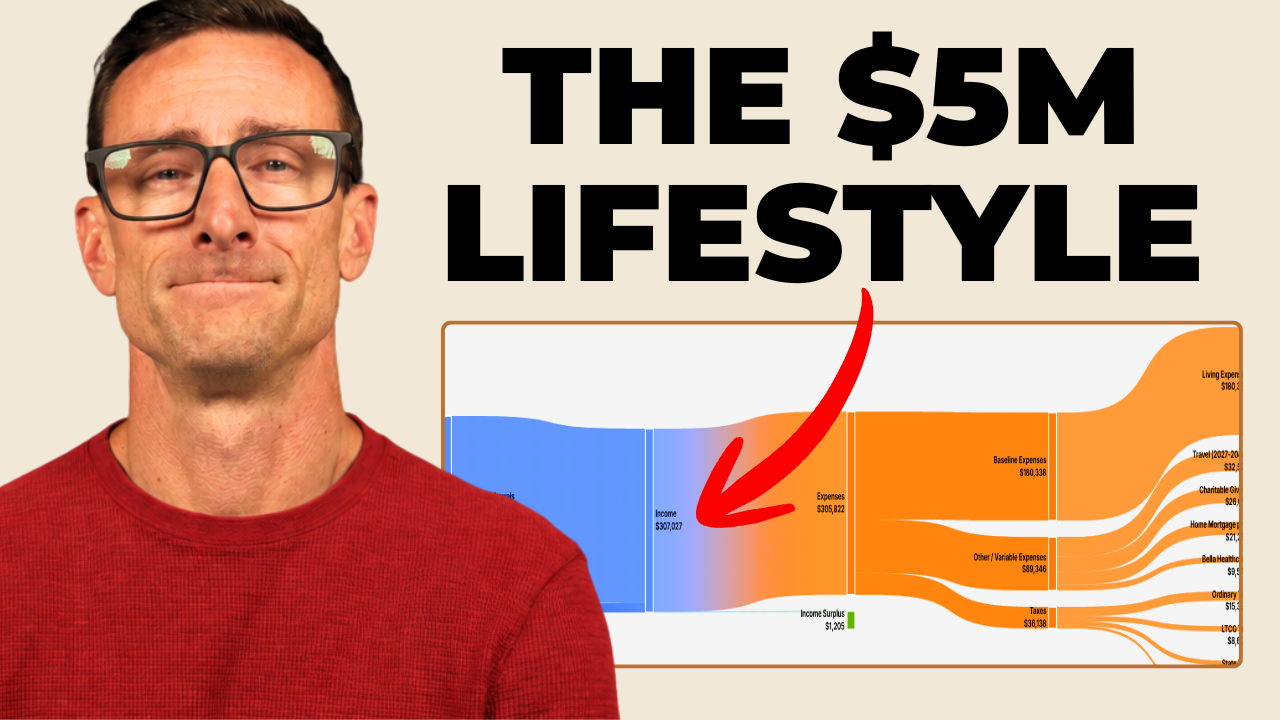
They asked whether the plan is sustainable, not whether they were doing well. Their budget includes:
- $14,000 a month in core living expenses, with some travel already built in
- An extra $2,500 a month for travel through Bella’s age 80, while they’re most active
- $2,000 a month in charitable giving
- Health insurance of about $1,100 a month for Bella until Medicare at 65
- A mortgage payment just under $1,800 a month
That puts their target at roughly $22,000 a month.
To manage spending over a retirement that could last 30 years, they use guardrails: preset boundaries that say when to adjust spending and by how much. The portfolio is projected at just under $5.4 million at retirement. If it grows to $7.25 million, spending can rise by $5,800 a month. If it falls to just under $2.8 million, spending drops by $800 a month. Those triggers are set conservatively, so the lower one is unlikely to be hit. The plan also earmarks $500,000 for long-term care.
Social Security: When and Who Claims
For couples, the timing decision can be worth hundreds of thousands of dollars over a lifetime. Brandon’s benefit at 67 is $3,700 a month, and Bella’s is near $4,000.
If both live into their late 80s or 90s, delaying both to 70 is the best math. To protect against the worst case, they modeled Brandon passing away around age 82. The surviving spouse keeps the larger benefit, which here is Bella’s, so she plans to wait until 70.
Brandon keeps more flexibility. He plans to claim at 67, but he could claim earlier if markets struggle early in retirement or delay if things are going well. That flexibility gives the plan a lever to pull. The early years matter most because they determine how vulnerable the couple is to a bad stretch of markets.
Retirement Tax Planning: Using the “Tax Valley”
With 86% of their savings pretax, doing nothing would get expensive. Two decisions carry the most weight. The first is which accounts to draw from first. The second is how to use the “tax valley,” the years between retirement and required minimum distributions (RMDs), which begin at 75 for both of them. Their taxable income will be lower than it has been in decades.
They won’t do Roth conversions in 2026 or 2027, since both are still working part of those years. Conversions start in 2028. A tax optimizer suggested converting all the way up to the 32% bracket, which saves the most on paper. But Brandon and Bella give to charity, and after 70½ they can send money from their IRAs directly to causes they care about through qualified charitable distributions, with no tax due. Converting too aggressively would mean paying tax now on dollars that could go to charity tax-free later. So they’ll target the 24% bracket instead.
The projected results:
- About $889,000 saved in lifetime taxes
- Average tax rate reduced by 3%
- Legacy increased by $1.8 million
These are directional estimates that need year-by-year analysis.
Investing While Living on the Portfolio
Their instinct was to get more conservative as retirement approached. The question is how conservative, and how. The key one: if stocks fell sharply tomorrow, how many years of income should sit in stable investments?
Their answer is a reserve of about $1.5 million, roughly six years of withdrawals. Most people land between three and seven years. That range reflects history: the average bear market takes around three years to recover, though the longest have taken six to seven. The reserve means they never have to sell stocks at the wrong time to pay bills.
The rest stays invested for growth, and each account has a job. The brokerage account is the first source of withdrawals and takes moderate risk. Bella’s Roth IRA, with the longest runway, is 100% stocks. The 401(k)s roll to IRAs at retirement with moderate growth. As the early years pass, they can reduce the reserve.
The Better Question
Brandon and Bella came in asking whether they had enough. The plan said yes, with room to spare. That shifted the conversation to what they want to do with the rest.
They modeled $36,000 a year in family gifts starting in about ten years, for home improvements, a first home or a head start on college. The guardrails adjust, with a slightly higher chance of a downward adjustment, but the plan still holds. The surplus could just as easily go to a vacation home, a cause or more travel.
Key Takeaways for Retiring With $5 Million
- Build the plan around spending, income timing, taxes and investments together, not just the balance.
- Use guardrails so you know in advance when to adjust spending.
- Treat Social Security timing as a couple’s decision, not two separate ones.
- The years before RMDs are a rare tax opportunity, and the calculator’s most aggressive answer isn’t always best.
- Size a stable-investment reserve to how many years of income you want protected.
- A strong plan can show room to spare. Decide what that surplus is for.
This article is for illustrative purposes only. Projections are estimates and not guarantees.
The Retirement Recap
Join the 1,000+ other retirees and get weekly articles and videos to help you retire with confidence. Subscribers also gain access to our private monthly client memo.
Seek Professional Guidance
Navigating retirement decisions can be complex. Consulting with a certified financial planner can provide personalized insights and strategies tailored to your unique circumstances. Whether you’re nearing retirement or planning ahead, expert advice can help you optimize your Social Security benefits and achieve greater financial confidence in your retirement years.
This does not constitute an investment recommendation. Investing involves risk. Past performance is no guarantee of future results. Consult your financial advisor for what is appropriate for you. Disclosures: https://onedegreeadvisors.com/disclosure/